Getting a new scoreboard is an exciting step for any facility. But before you settle on a model, one of the most practical decisions you will make is choosing the right scoreboard size. Too small and it becomes difficult to read from the stands. Too large and it may not fit your space or budget. Finding that sweet spot takes a little planning, but it makes a lasting difference.
Why Scoreboard Size Affects More Than Aesthetics
A scoreboard that is hard to read frustrates fans and creates confusion during gameplay. Coaches need to glance up and instantly know the score, the time, and the period. Officials rely on visible displays to keep games moving efficiently. Size directly affects readability, and readability affects the entire game-day experience.
Start With Your Viewing Distance
The most important factor in choosing a scoreboard size is how far away your viewers will be. A display that looks great from 50 feet may be too small for a venue where fans sit 200 feet away.
A general rule of thumb is that digit height should increase with viewing distance. For every 50 feet of viewing distance, you typically need at least one inch of digit height to maintain readability. Measure your facility from the scoreboard location to the farthest seat before making any decisions. This single step will narrow down your options considerably and help you avoid a costly mismatch.
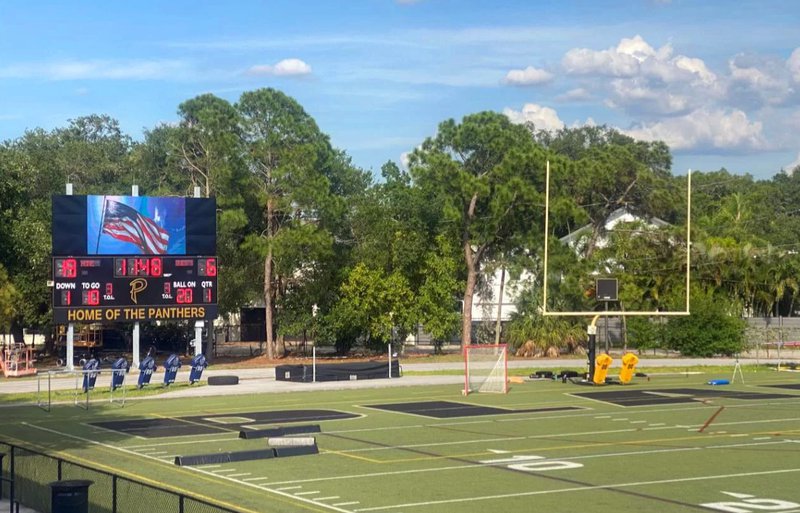
Scoreboard Size Considerations for Outdoor Fields
Outdoor fields present unique sizing challenges. Open air venues have no walls to contain the viewing area, which means your scoreboard needs to be visible from multiple angles and distances.
Football and soccer fields, for instance, often require larger displays to serve fans seated along the full length of the sidelines. Baseball diamonds have a more contained viewing area, but sight lines from different seating sections still need to be accounted for.
Outdoor scoreboards also need to hold up against the elements. Choosing a display that is both the right size and built for outdoor exposure keeps your investment performing season after season. Facilities near the coast or in high-humidity environments should pay particular attention to durability, since weather-resistant scoreboards are specifically engineered to handle those conditions without compromising visibility or lifespan.
Scoreboard Size Considerations for Indoor Gyms
Indoor venues have their own set of sizing factors. Ceiling height, wall space, and the layout of seating all influence what size works best.
Basketball and volleyball gyms are typically more compact than outdoor stadiums. This means a large outdoor-scale display would overwhelm the space. At the same time, the display still needs to be readable from the top row of bleachers.
Mounting location matters too. A scoreboard mounted high on an end wall needs to be sized appropriately for that height and distance. One mounted on a side wall at a lower position may require a smaller footprint but a higher brightness level to stay visible under gym lighting.
Multi-Sport Facilities Need Flexible Sizing
If your facility hosts more than one sport, your scoreboard needs to serve multiple contexts. A display that works perfectly for basketball should also handle volleyball, wrestling, or other indoor events without becoming a distraction or a limitation.
Some facilities opt for modular or configurable display systems that can adapt to different sports and layouts. Planning for versatility at the sizing stage saves you from needing a second upgrade down the road.
Factor in Your Audience Size and Atmosphere Goals
A small recreational facility with modest attendance has different display needs than a high school stadium that fills up every Friday night. Your scoreboard size should reflect the scale of your events and the experience you want to create.
Larger venues benefit from bigger displays that command attention and contribute to the energy of the game. Well-sized scoreboards keep the crowd engaged throughout the event, especially when paired with dynamic content that goes beyond just showing the score.

Even smaller venues can punch above their weight with the right display choice. A well-sized scoreboard in a compact gym can elevate the atmosphere significantly.
Don't Overlook Installation and Structural Requirements
Once you have a target size in mind, make sure your facility can actually support it. Larger scoreboards require more structural support, more electrical capacity, and more clearance from surrounding structures.
Check ceiling heights, wall load ratings, and available power supply before finalizing your choice. Working through these details early prevents delays and unexpected costs during installation.
If you are upgrading from an older system, compare the new dimensions carefully. A slightly larger display may require modifications to the mounting area that need to be scheduled and budgeted in advance.
Get the Right Scoreboard Size From the Start
Choosing the right scoreboard size for your field or gym comes down to knowing your space, your audience, and your goals. Taking accurate measurements, thinking through your sport-specific needs, and planning for long-term use all set you up for a successful upgrade.
At Varsity Scoreboards, we carry a wide range of scoreboards built for facilities of every size, from compact indoor gyms to expansive outdoor stadiums. For venues looking to go beyond basic scoring displays, our outdoor and indoor video displays offer a more immersive experience for fans and athletes alike. We also offer marketing services to help you turn your display into a revenue-generating tool for your program.
Contact us today to get a free quotation and let us help you find the perfect fit for your facility.