Outdoor sports venues face a visibility challenge that indoor facilities rarely deal with. Whether it's the midday sun washing out your scoreboard or stadium lights creating glare after dark, LED displays are built to handle both extremes. Getting the right setup means your players, coaches, and fans always have a clear view of the action.
Why Visibility Matters More Than You Think
Poor visibility affects more than just the fan experience. Coaches rely on accurate, readable scoreboards to make real-time decisions. Referees and officials need clear displays to manage game flow. When a scoreboard is hard to read, it slows everything down. Upgrading to a high-performance display solves this problem at the source.
How LED Displays Handle Direct Sunlight
Daytime games present one of the toughest visibility tests for any display system. Standard screens often fade or wash out when competing with direct sunlight. LED technology addresses this with high-brightness output designed specifically for outdoor conditions.

Modern LED panels measure brightness in nits. Outdoor displays typically require significantly higher nit levels than indoor screens to remain legible in full sunlight. The right LED display stays sharp and readable even on the brightest game days.
Contrast ratio also plays a role. A well-calibrated LED panel delivers deep blacks and vivid colors that hold up under intense ambient light. This keeps your scoreboard readable from the bleachers, the sidelines, and across the field.
LED Displays at Night: Managing Glare and Light Spread
Night games bring a different set of challenges. Artificial lighting can create glare and reduce the readability of older display systems. LED technology handles this through precise light control and adjustable brightness settings.
A quality LED display can be dimmed for nighttime use without sacrificing clarity. This protects viewers from eye strain while keeping the content sharp and easy to read. It also helps reduce light pollution in the surrounding areas near the facility.
Directional LED panels focus light toward the intended viewing area. This minimizes spill and ensures that the brightness you're putting out is actually working for your audience, not against them.
The Role of Pixel Pitch in Clarity
Pixel pitch refers to the distance between individual LED clusters on a display panel. A smaller pixel pitch means more pixels per square foot, which translates to a sharper, more detailed image.
For close-range viewing, such as indoor gyms or smaller venues, a tighter pixel pitch makes a noticeable difference. For large outdoor stadiums, a wider pitch is often sufficient and more cost-effective. Matching pixel pitch to your venue size and viewing distance is one of the most important decisions in the selection process.
Getting this right ensures your display looks polished and professional at every seat in the house.
LED Displays Are Built for All-Weather Performance
Outdoor venues deal with rain, humidity, temperature swings, and dust. A display system that cannot handle these conditions creates costly maintenance headaches. LED displays designed for outdoor use carry weatherproof ratings that protect internal components from the elements.
Look for displays with high ingress protection ratings. These ratings indicate how well a unit resists dust and water intrusion. A properly rated LED panel can operate reliably through a rainy Friday night game just as well as a sunny Saturday afternoon.
Durability also extends the lifespan of your investment. A display that holds up in tough conditions gives you more seasons of reliable performance.
Ease of Operation Makes a Real Difference
A high-quality display system should be easy for your staff to operate, not a burden. Many facilities run lean on game days, with one or two people managing the scoreboard alongside other responsibilities.
Today's LED video displays are designed to be user-friendly, allowing a single operator to manage the entire system without a steep learning curve. Intuitive controls, remote management options, and straightforward setup all reduce the pressure on your game-day staff. When your team feels confident running the system, everything on game day runs more smoothly.
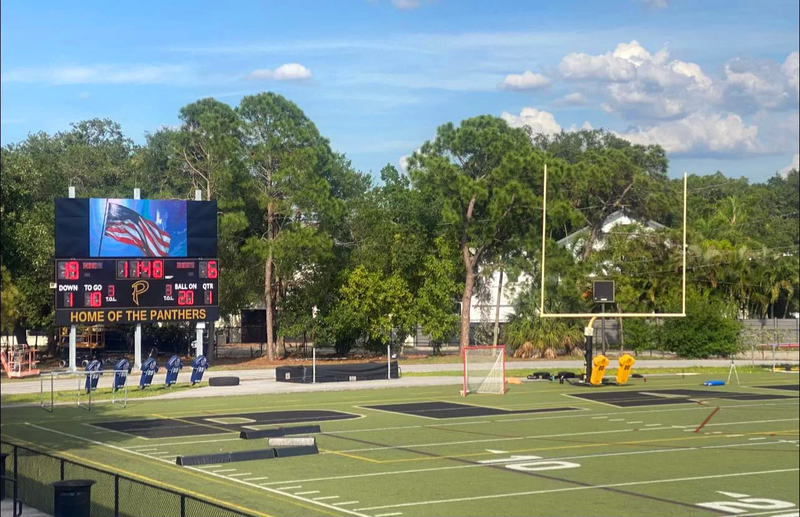
Designing Your LED Display Setup for Maximum Impact
Every venue has different sightlines, seating layouts, and ambient lighting conditions. There is no one-size-fits-all answer to display placement and configuration.
Taking the time to assess your facility before selecting a system pays off. Factors like mounting height, viewing angles, and distance from the farthest seats all affect how well your display performs. The right configuration can significantly improve visibility outdoors with an LED scoreboard, especially when placement and brightness levels are dialed in for your specific venue.
A thoughtful setup means fewer complaints from fans and fewer readability issues during critical game moments.
Upgrade Your Venue With the Right LED Displays
Visibility is one of the most fundamental aspects of a great sports experience. The right display system makes your venue more professional, more functional, and more enjoyable for everyone involved.
At Varsity Scoreboards, our outdoor and indoor video displays are built to perform in every lighting condition, from high-noon sunshine to Friday night lights. We also offer marketing services to help you get even more value from your display investment by turning it into a revenue-generating asset for your program.
Contact us today to get a free quotation and let us help you find the right LED display solution for your facility.