Officials carry a significant amount of responsibility during any athletic competition. They enforce the rules, manage game flow, resolve disputes, and keep the overall event on track from start to finish. The right scoreboard features make that job measurably easier by giving officials the accurate, visible information they need to make confident calls without breaking the rhythm of the game.
Officials Depend on More Than Just the Score
It is easy to think of a scoreboard as primarily a tool for fans and coaches. Officials, however, rely on the display just as heavily, and often in more time-sensitive ways. A referee managing foul counts, a line judge tracking possession, or a timekeeper confirming how much time remains in a period all need information that is accurate, current, and immediately visible from wherever they are on the court or field.
When scoreboard features fall short of those needs, officials are forced to rely on manual tracking, verbal confirmation from the scorer's table, or their own mental record of game events. Each of those workarounds introduces the possibility of error and slows the pace of play in ways that frustrate everyone involved.
Clock Visibility Is the Most Critical Feature for Officials
Of all the information a scoreboard displays, the game clock is the one officials reference most frequently. Period transitions, timeout management, and end-of-game situations all hinge on the clock being visible, accurate, and updated in real time.

A clock display that is too small, too dim, or positioned at an angle that creates visibility issues for officials on the floor compromises their ability to manage the game effectively. Choosing scoreboard features that prioritize clock size, brightness, and placement ensures that officials always have an authoritative reference point no matter where they are positioned during play.
Foul and Penalty Tracking Reduces Disputes
Foul counts are one of the most common sources of dispute between coaches, players, and officials during a game. When the scoreboard clearly tracks and displays individual and team fouls in real time, those disputes are resolved quickly by reference to a shared, visible record rather than through debate.
Sport-specific foul tracking features vary in their implementation, and choosing a system that handles the specific requirements of your primary sport or sports is worth careful attention. Knowing how to choose a scoreboard with the right sport-specific features for your facility keeps officials and coaches working from the same information throughout every game.
Timeout Tracking Keeps Game Flow Intact
Timeout management is an area where clear scoreboard features make a tangible difference in how smoothly games run. When the number of timeouts remaining for each team is displayed prominently and updated immediately after each timeout is called, officials can confirm usage at a glance without consulting the scorer's table or interrupting play.
In sports where timeout limits are strictly enforced and violations carry penalties, this feature protects the integrity of the game and reduces the likelihood of disputes arising from confusion about how many timeouts remain. Officials who can reference a clear display make those determinations faster and with greater confidence.
Period and Possession Indicators Support Faster Officiating
Beyond the clock and the score, several secondary scoreboard features support the pace of officiating in meaningful ways. Period indicators that clearly show which quarter, half, or set is currently in play help officials stay oriented during events with multiple stoppages or complex timing structures.
Possession indicators used in basketball and other sports give officials an immediate reference for alternating possession calls without requiring a separate display or verbal confirmation from the table. These features may seem secondary to the main display functions, but their absence creates small inefficiencies that compound over the course of a full game.
Horn and Signal Integration Removes Ambiguity
End-of-period horns and warning signals are standard features in most scoreboard systems, but the quality and reliability of those signals vary considerably between systems. An end-of-period horn that fires reliably, at the right volume, and at precisely the right moment removes ambiguity from one of the most contested moments in any game.
Officials who can trust the horn to signal the end of a period accurately and consistently can make end-of-game calls with greater confidence. Paired with well-designed clock switch controllers that give operators precise control over clock starts, stops, and period transitions, a reliable horn system takes the guesswork out of timing management entirely.
Shot Clocks and Play Clocks Keep Pace of Play High
Shot clocks in basketball and play clocks in football are among the most impactful scoreboard features for managing the pace of competition. When these displays are clearly visible, accurately timed, and well-positioned for both officials and players, violations are called promptly and the flow of the game stays consistent.
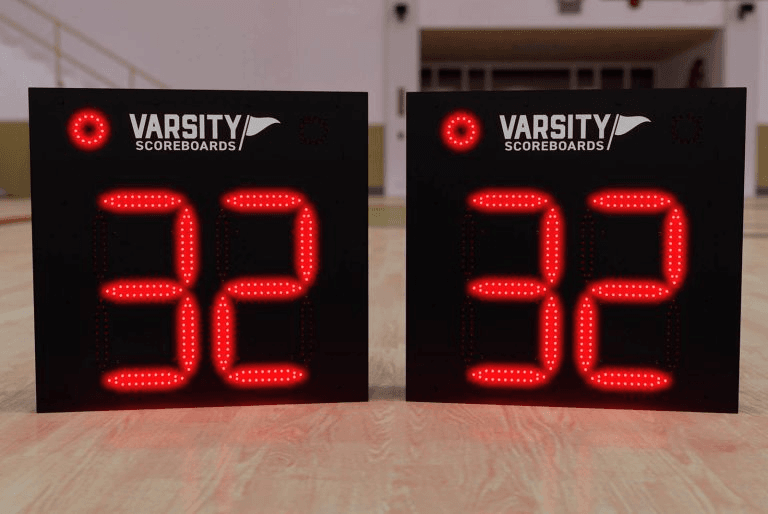
Poorly positioned or hard-to-read shot clocks create situations where officials miss violations or make delayed calls because they could not get a clear read on the display in time. Investing in shot clock and play clock features that meet the visibility standards of your sport and venue pays off in cleaner, faster-paced games across the board.
Display Brightness Affects What Officials Can Actually Use
A scoreboard loaded with useful features delivers none of its value if officials cannot read the display clearly from their position on the court or field. Brightness levels that are appropriate for the lighting conditions of your venue are a fundamental requirement, not an optional upgrade.
Indoor venues with controlled lighting have different brightness requirements than outdoor facilities competing with afternoon sunlight or stadium lighting at night. Evaluating display brightness as part of the feature assessment for any scoreboard purchase ensures that officials and everyone else in the venue can actually use the information being displayed.
Give Officials the Tools They Need With the Right Scoreboard Features
Officials do their best work when the facility supports them with clear, accurate, and reliable information. Scoreboard features that are designed with officiating needs in mind make games run faster, cleaner, and with fewer disputes that disrupt the experience for everyone involved.
At Varsity Scoreboards, our premium scoreboards for a variety of sports are built with the full range of game-day needs in mind, including the visibility and accuracy requirements that officials depend on. And if budget is a barrier to getting the right system in place, our Varsity Sports Marketing program offers a practical way to fund the upgrade your facility needs without placing the full cost on your athletic department. Contact us today to get a free quotation.