Game day comes with enough moving parts already. Between coordinating staff, preparing the facility, and making sure every team has what they need, the last thing anyone wants is a tangle of cables slowing things down at the scorer's table. Wireless controls remove one of the most common sources of friction in game-day setup and give facilities a cleaner, more flexible way to manage their scoreboard operations.
The Hidden Cost of Wired Scoreboard Systems
Wired control systems have been the standard for a long time, and they work. But they come with a set of limitations that facilities tend to accept out of habit rather than necessity. Cables need to be run, secured, and stored after every event.
Trip hazards appear near the scorer's table and along the floor. Setup takes longer than it should, especially when back-to-back events leave little time between games.
Over the course of a full season, those small inefficiencies add up to a significant amount of time and effort. Switching to a wireless setup does not just make individual game days easier. It changes the overall rhythm of how your facility operates.
Wireless Controls Give Operators More Freedom
One of the most practical advantages of wireless controls is the freedom they give to whoever is running the scoreboard. A wired controller anchors the operator to a fixed position, which may or may not be the best spot for visibility and game management on any given night.
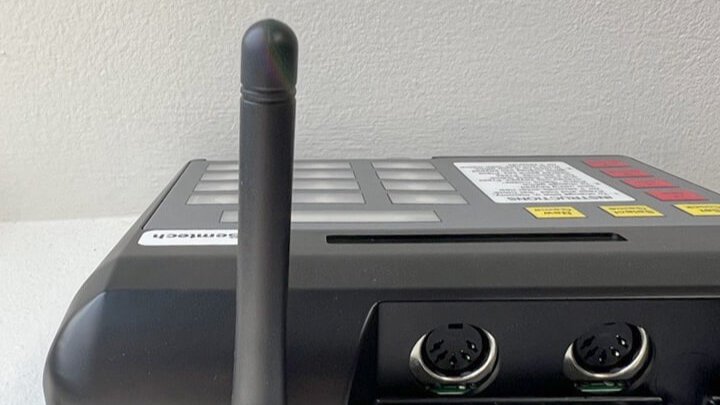
With wireless controls, scoring personnel can position themselves wherever visibility is best, without restrictions imposed by cable length or outlet placement. That flexibility matters more than it might seem at first. An operator who can see the court or field clearly from their position makes faster, more accurate updates and catches errors before they affect the game.
Setup and Teardown Become Significantly Faster
Anyone who has managed a busy athletic facility knows how valuable time is between events. A gym that hosts a JV game followed immediately by a varsity game has almost no margin for slow transitions. Wireless controls eliminate the cable routing and securing steps that eat into that margin.
Setup becomes a matter of positioning the controller and confirming the connection. Teardown is equally fast. Over the course of a week with multiple events across different sports, those time savings are felt by every staff member involved in running the facility.
Fewer Cables Mean a Safer Environment
Floor cables near the scorer's table create real safety risks. Operators, substitute players, coaches, and officials all move through that area during a game. A cable in the wrong place at the wrong moment can cause a trip and fall with serious consequences.
Wireless controls remove that hazard entirely. The court or field sideline stays clear, the scorer's table area stays organized, and the overall environment is safer for everyone present. Facilities that host youth events in particular benefit from eliminating trip hazards in high-traffic areas where kids are constantly moving.
Reliability of Wireless Systems Has Improved Dramatically
Early wireless technology had a reputation for connectivity issues that made some facilities hesitant to make the switch. That hesitation made sense at the time, but modern wireless control systems are built to a much higher standard of reliability. Signal stability, interference resistance, and range have all improved significantly.
A quality wireless setup performs consistently across different venue sizes and environments. The key is pairing the right components for your specific facility. A properly installed wireless antenna plays a central role in maintaining a stable connection between the controller and the scoreboard, especially in larger venues where distance and structural interference can affect signal quality.
Multi-Sport Facilities Benefit the Most
Facilities that host several different sports throughout the week deal with constantly shifting table positions, court configurations, and staffing arrangements. A wired system struggles to adapt to those changes without additional cable management work each time the setup changes.
Wireless controls handle that variability naturally. The controller works wherever the operator is positioned, regardless of how the facility has been configured for that particular event. This makes wireless systems especially well-suited to schools and recreation centers that run a full athletic calendar across multiple sports and age groups.
Training New Operators Is Easier Without Cable Management
Volunteer operators and part-time staff already have enough to learn when they sit down behind a scoreboard controller for the first time. Adding cable management instructions to that training process introduces one more thing that can go wrong. Wireless controls simplify the operator experience from the very first game.

New staff members can focus entirely on learning the control functions and game flow rather than worrying about whether cables are properly routed and secured. That reduced learning curve leads to more confident operators and fewer game-day mistakes across the board.
Wireless Controls Work Alongside Existing Infrastructure
One concern facilities sometimes raise about switching to wireless is whether it requires a complete system overhaul. In many cases, it does not. Wireless control components can often be integrated into an existing scoreboard setup, allowing facilities to gain the benefits of wireless operation without replacing equipment that is otherwise functioning well.
Assessing your current system and identifying which components support wireless integration is a practical first step. That evaluation helps clarify whether a full upgrade or a targeted addition is the right path forward for your facility.
Simplify Your Game-Day Operations With Wireless Controls
The shift to wireless controls is one of the more straightforward upgrades a facility can make, and the day-to-day benefits are felt immediately. Faster setup, greater operator flexibility, a safer environment, and a cleaner overall operation all follow from making the switch.
At Varsity Scoreboards, we carry a variety of scoreboards that support modern wireless control systems, as well as individual scoreboard parts for facilities looking to upgrade specific components rather than replace an entire system. Our program to secure sponsorship for a new scoreboard or video display can also help offset the cost of getting your facility where it needs to be.
Let us help you find the right wireless control solution for your facility. Contact us today.